


أخبارنا
أخبارنا
- 09 مارس, 2026
الأنمي الرياضي: من ثقافة فرعية إلى أداة تأثير في الاقتصاد الرياضي
كيف أصبح الأنمي منصة استراتيجية للوصول إلى الجيل الجديد
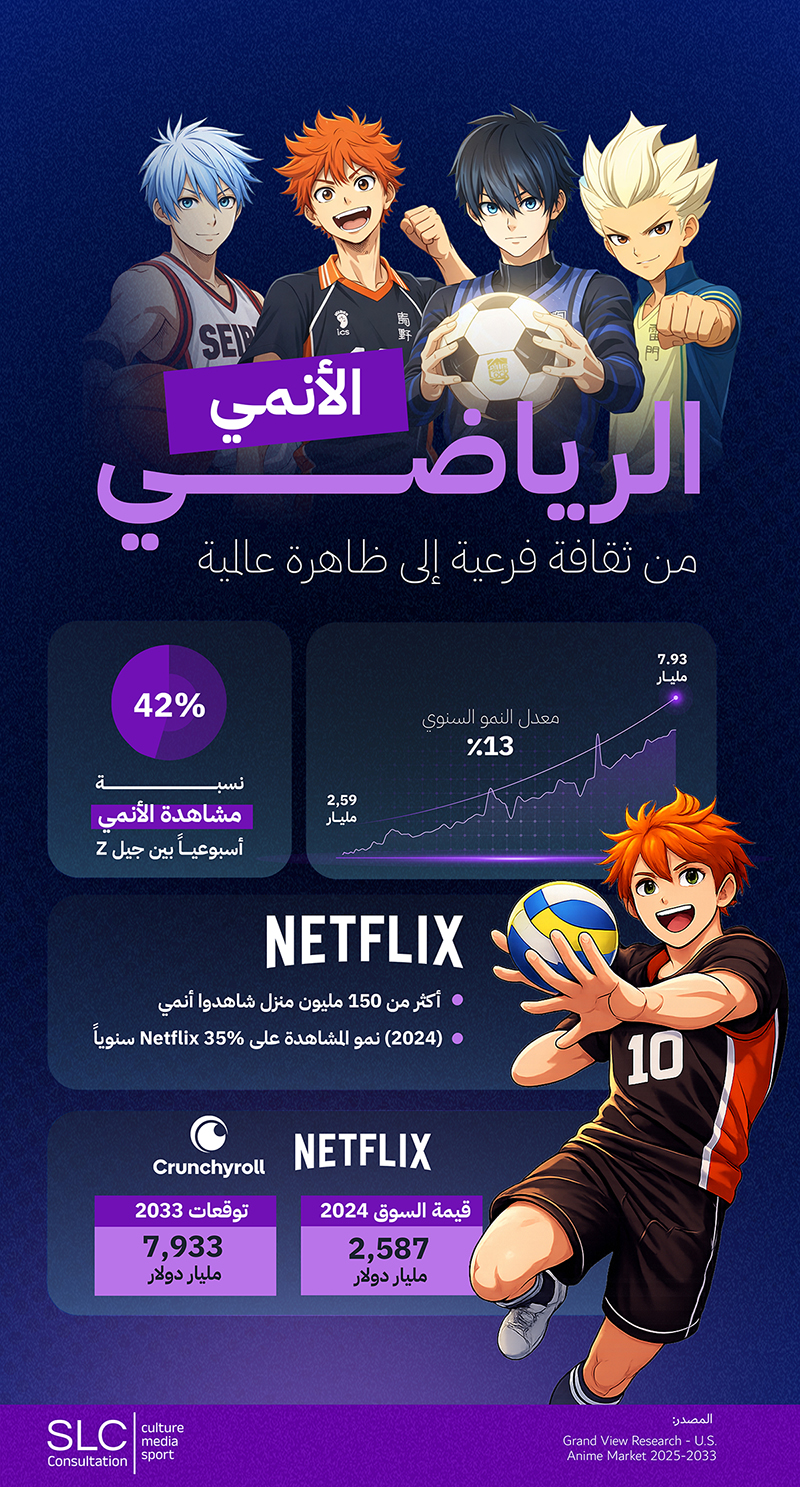
لم يعد الأنمي الرياضي مجرد محتوى ترفيهي موجه لمحبي الرسوم اليابانية، بل أصبح ظاهرة ثقافية عالمية تؤثر في سلوك الجيل الجديد واهتماماته الرياضية. ومع التوسع الكبير في منصات البث الرقمي، تحول هذا النوع من المحتوى إلى أحد أسرع قطاعات الترفيه نمواً، ما دفع العلامات التجارية الرياضية إلى استكشاف فرص التعاون معه كوسيلة للوصول إلى جمهور الشباب.
تشير التقديرات إلى أن سوق الأنمي في الولايات المتحدة بلغ نحو 2.59 مليار دولار في عام 2024، مع توقعات بوصوله إلى 7.93 مليار دولار بحلول عام 2033، بمعدل نمو سنوي مركب يقارب 13%. ويعكس هذا النمو تحول الأنمي من ثقافة فرعية إلى تيار رئيسي في صناعة الترفيه العالمية.
الأنمي الرياضي: من الهامش إلى التيار الرئيسي
خلال العقد الأخير، شهد الأنمي الرياضي انتشاراً واسعاً بفضل منصات البث العالمية، ما جعله جزءاً من الثقافة الرقمية لدى الشباب في مختلف أنحاء العالم.
أعمال بارزة مثل
Haikyu!!
Blue Lock
Kuroko's Basketball
نجحت في تحويل الرياضة إلى قصص ملهمة تتمحور حول الطموح والعمل الجماعي والانضباط. هذه السرديات لا تكتفي بعرض المنافسة الرياضية، بل تخلق ارتباطاً عاطفياً قوياً بين الجمهور والرياضة نفسها.
بالنسبة للجيل الجديد، أصبحت هذه الشخصيات مصدر إلهام يؤثر في اهتمامهم بالرياضة واختيارهم لممارستها أو متابعتها.
منصات البث تقود الانتشار العالمي
لعبت منصات البث الرقمي دوراً محورياً في تحويل الأنمي إلى ظاهرة عالمية. فقد ساهمت المنصات الكبرى في توسيع قاعدة المشاهدين خارج اليابان والوصول إلى جماهير جديدة.
تشير بيانات منصة
Netflix
إلى أن أكثر من 150 مليون منزل حول العالم شاهدوا الأنمي في عام 2024، مع نمو سنوي في المشاهدة يقارب 35%.
كما لعبت منصة
Crunchyroll
دوراً مهماً في بناء مجتمع عالمي من عشاق الأنمي، ما ساهم في تعزيز انتشار هذا النوع من المحتوى بين الأجيال الشابة.
وتشير الدراسات أيضاً إلى أن 42% من أفراد جيل Z يشاهدون الأنمي أسبوعياً، وهو ما يعكس حجم التأثير الثقافي لهذا القطاع.
عندما يلتقي الأنمي بالتسويق الرياضي
مع هذا النمو المتسارع، بدأت العلامات التجارية الرياضية في استكشاف الأنمي كقناة جديدة للتواصل مع الجمهور.
أحد أبرز الأمثلة على هذا التوجه كان حملة “Footballverse” التي أطلقتها شركة
Nike
في عام 2022 قبل بطولة كأس العالم.
اعتمد الإعلان على فكرة “الكون المتعدد لكرة القدم”، حيث يجتمع نجوم اللعبة من أجيال مختلفة في تجربة خيالية تجمع بين الواقع والرسوم المتحركة.
ظهر في الإعلان عدد من أبرز نجوم كرة القدم مثل:
Cristiano Ronaldo
Kylian Mbappé
Ronaldinho
Ronaldo Nazário
Kevin De Bruyne
Virgil van Dijk
كما تضمن الإعلان ظهور شخصية الأنمي الكروي الشهيرة Shūya Gōenji من مسلسل
Inazuma Eleven
يمثل هذا الدمج بين الشخصيات الحقيقية والرموز الثقافية الرقمية نموذجاً جديداً في التسويق الرياضي، حيث تستفيد العلامات التجارية من الثقافة الشعبية للوصول إلى جمهور الشباب بطريقة أكثر تأثيراً.
دلالات استراتيجية لصناعة الرياضة
يعكس صعود الأنمي الرياضي عدداً من التحولات في العلاقة بين الرياضة وصناعة الترفيه.
أولاً، أصبح المحتوى الثقافي عاملاً مؤثراً في تشكيل اهتمامات الجماهير الرياضية. فالشباب الذين يتابعون الأنمي الرياضي غالباً ما يطورون اهتماماً أكبر بالرياضات التي تعرضها هذه الأعمال.
ثانياً، يوفر الأنمي منصة فعالة للعلامات التجارية لبناء ارتباط عاطفي مع الجمهور، وهو ما يمثل أحد أهم عناصر التسويق في الاقتصاد الرياضي الحديث.
وأخيراً، تفتح هذه الظاهرة المجال أمام نماذج جديدة من التعاون بين شركات الرياضة وصناعة الترفيه، مثل المنتجات المشتركة، والحملات التسويقية الإبداعية، والتجارب الرقمية التفاعلية.
الخلاصة
لم يعد الأنمي الرياضي مجرد محتوى ترفيهي، بل أصبح منصة تأثير ثقافي وسلوكي قادرة على تشكيل اهتمامات الجيل الجديد بالرياضة.
ومع النمو المتسارع لسوق الأنمي عالمياً، من المتوقع أن نشهد توسعاً أكبر في الشراكات بين شركات الرياضة وصناعة الأنمي، ما يخلق فرصاً جديدة للتسويق وبناء العلامات التجارية.
في المستقبل، لن تكون المنافسة على جذب الجماهير داخل الملاعب فقط، بل أيضاً داخل عالم القصص والشخصيات التي تلهم الجيل القادم من الرياضيين والمشجعين.